Le cloître
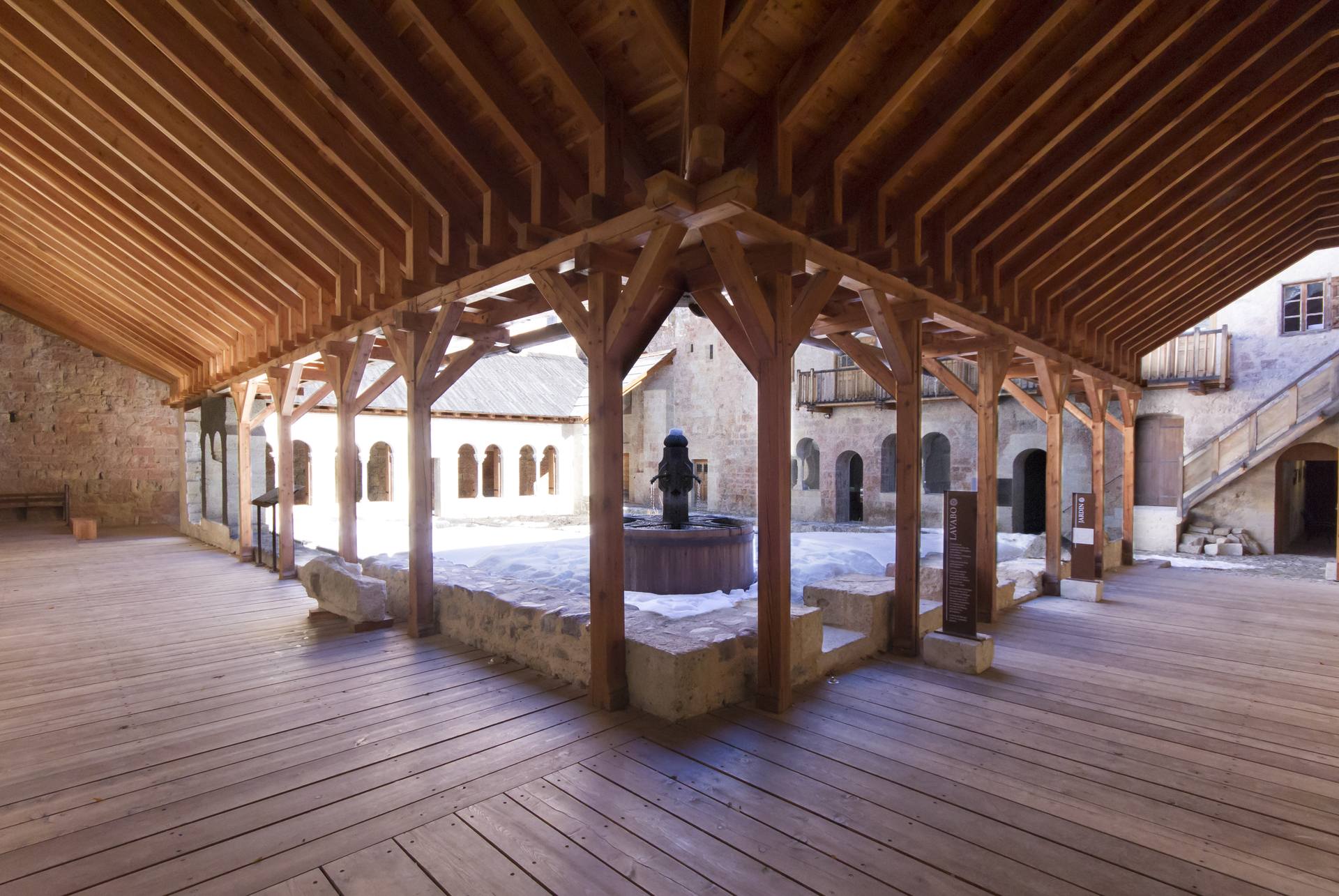





Boscodon : Le Cloître, Lieu de Méditation, de Lecture et de Purification
Le cloître de Boscodon, bien qu'étant partiellement reconstruit, offre un apperçu de ce qu'il fut autrefois. Si une seule des galeries médiévales a été restituée, elle suffit à inviter l'imaginaire à combler les vides : quatre galeries majestueuses, entourant abbatiale, se dessinent lentement dans l'esprit.
Le cloître n'est pas seulement un espace de circulation. C'est un véritable parcours spirituel, un chemin silencieux ioù chaque recoin semble murmurer un secret oublié. A l'angle nord-est, la travée nord abrite un lieu particulier : dans le mur du cloître, l'armarium, cette armoire-bibliothèque antique, renfermant les livres que les moines prenaient plaisir à lire à haute voix. C'est ici, dans ce repli intime, que la lectio prenait vie - l'étude des textes saints, plongée dans la sagesse des siècles passés.
Cette travée est aussi un lieu de méditation, un espace où les moines se recueillaient dans un silence presque palpable, entre les pierres anciennes et les ombres des siècles.
Le cloître, cependant, n'est pas uniquement fait pour la prière et l'étude. Ses jardins, situés en son centre, offrent une pause rare dans la rigueur monastique. L'eau, qui s'écoule sans fin dans le lavabp en face du réfectoire, compose une mélodie apaisante, un bruit de fond qui contraste avec l'austérité des murs. C'est ici, au lavabo, que les rituels de purification avaient lieu : le lavement des pieds, le rasage des moines, ou encore de leurs cheveux, un lieu unique qui concentre à lui seul une part de la vie quotidienne du monastère.
Aujourd'hui, ces jardins ne reproduisent plus l'hortus conclusus, le jardin des cloîtres médiévaux; mais ils conservent une part de leur mystère, et font encore résonner les échos d'une époque où chaque geste, chaque plante, chaque silence était empreint de symbolisme.